
Data Science Workshops
The Kansas Data Science Consortium (KDSC) was tasked by the National Science Foundation to create data-science based workforce development opportunities. The KDSC is proud to offer a series of workshops to students and professionals that are career relevant and cutting edge.

Introduction to SQL Workshop
The Kansas Data Science Consortium, in collaboration with Assessment & Technology Solutions (ATS KU), is hosting an Intro to SQL Workshop on Friday, Nov. 13! Please drop in and join us for as much of the workshop as possible, we are looking forward to seeing you thereContact us
Is your organization looking for a specific training or workshop? Contact us at kansasdata@ku.edu!
Previous Workshops
No Really, What is Data Ethics?
Hosted by Ramón Alvarado of the University of Oregon
Roughly a decade ago Floridi and Taddeo (2016) defined data ethics as a field that draws insights from the ethics of data (e.g., gathering, curation, storage), the ethics of algorithms (the use, deployment, and design of computational technologies) and the ethics of practice (oaths, mission statements, best- practices, etc.). A more sophisticated overview of such field could also easily identified that, despite its repeated omission from the literature, business ethics is additionally one of the most insightful sources of careful consideration and precedent for the field (De George, 2009). Underlying any and all of these sources is of course an exploration of profound moral dilemmas and frameworks which— for better or for worse— strongly hinge on utilitarian values. For the past decade, however, the strict focus of data ethics on harm mitigation related to transparency, bias, fairness, compliance, and regulation have exhausted its program without much left to show for it other than tired narratives that have lead to either ethics washing or ethics bashing (Bietti, 2020). In this talk we will explore what it means for a data ethics program to go beyond this paradigm of mitigation and start asking questions from a philosophical perspective in which data, databases, and data technologies inevitably drive the most central aspects of our contemporary civilization.
View Recording - Data Ethics Webinar
The KDSC hosted a two part time series workshop featuring Joonha Park (KU Math Department) and Trambak Banerjee (KU Business School).
Accessing Google CoLab
- Each participant must have access to Google Colab (https://colab.research.google.com/). Colab is free and they only need a Gmail ID for this.
- Participants with a `.edu' email id (such as KU students, staff and faculty) should get the pro version of Colab (https://colab.research.google.com/signup), which is also free.
KDSC hosted a weather data activity as part of the Family STEM night hosted by ARISE and the KU Natural History Museum. Follow the link below to review the slides and preview the activity! This activity can also be found in the KDSC Online Repository.
Find the Tornado Activity
The Introduction to Tableau Workshop began with an overview of best practices for data visualization and ended with two hands-on tutorials using real world data!
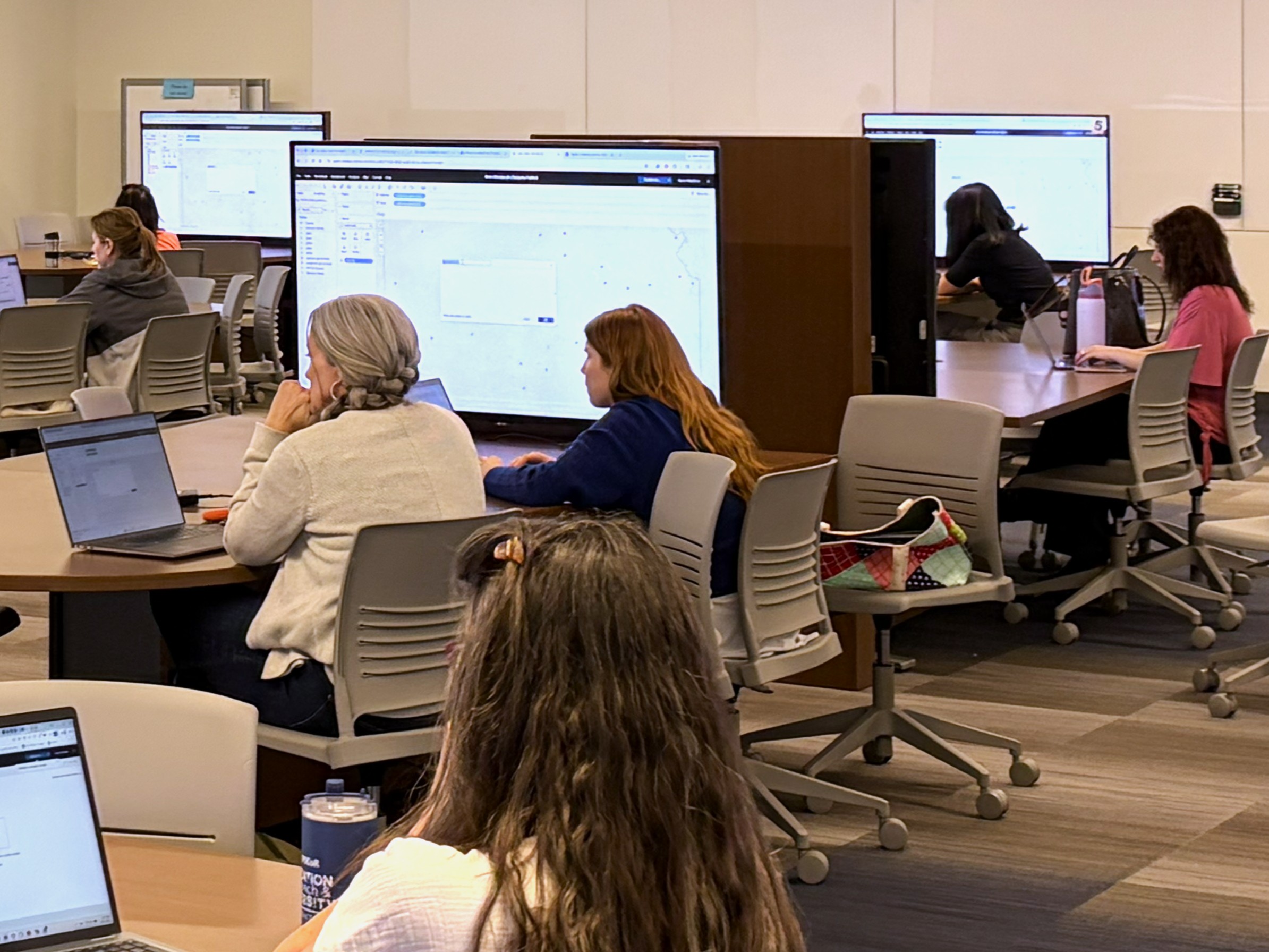
The Introduction to ArcGIS workshop provided a step-by-step walkthrough of how to use basic features as well as an applied tutorial using local transit data.
ArcGIS Workshop - Materials
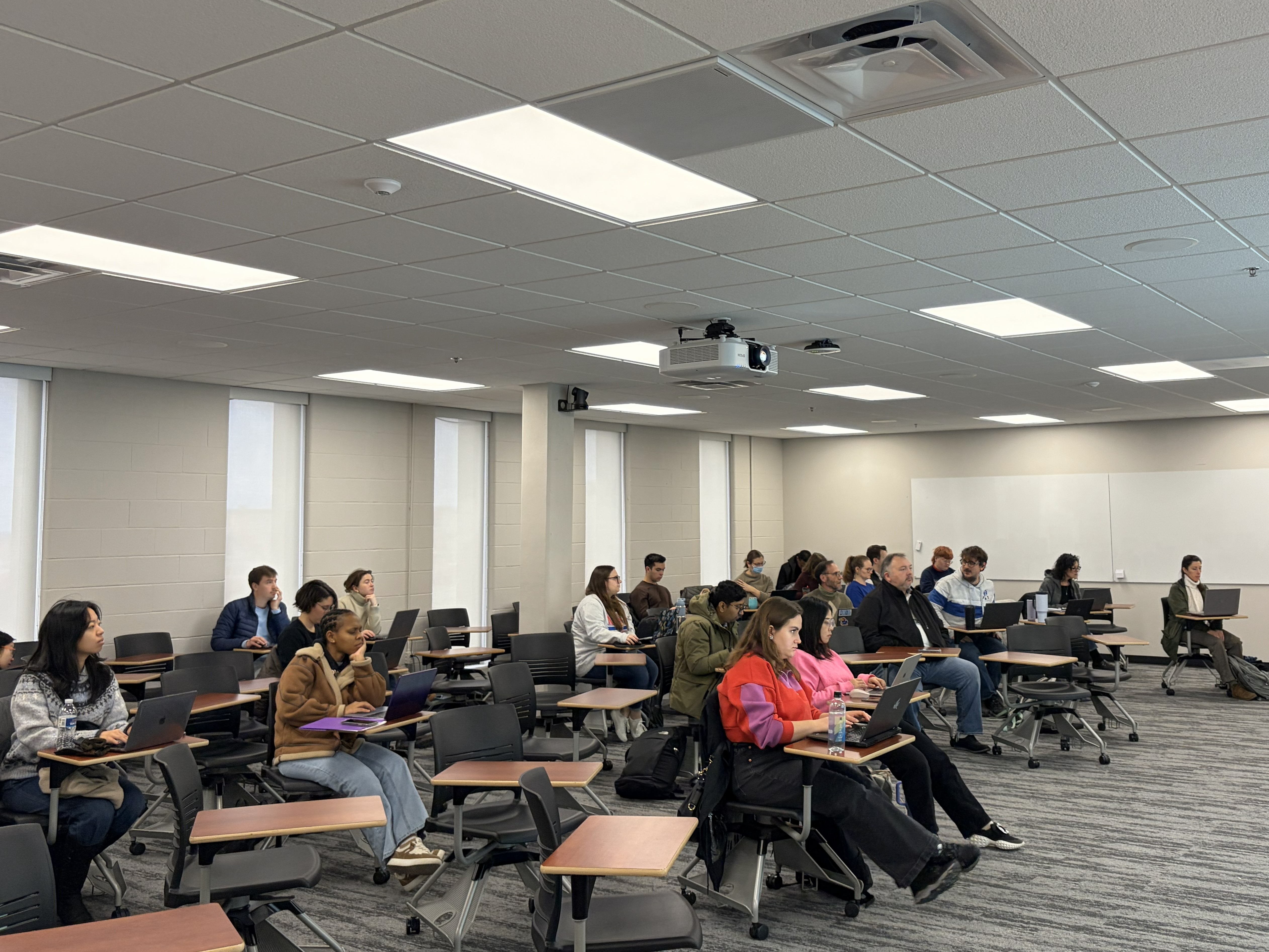
Topics included a gentle introduction to programming in R and a refresher on probability theory, research design, and measurement. Ideal for incoming graduate students preparing for their first statistical methods course.
S4 Bootcamp - Recording
S4 Bootcamp - Materials
The Intro to Stata Workshop Series provided an overview of three basic skillsets: Wrangling, Visualizations, and Statistical Analysis. Each workshop can be found below and in the KDSC Online Repository.
Intro & Wrangling:
- Stata Wrangling Workshop (.pdf)
- Wrangling - Poverty Panel (.do file)
- Wrangling - Economic Panel (.do file)
- Wrangling - Working with the Data (.do file)
Visualizations:
- Spring:
- Fall:
Statistical Analysis:
- Spring:
- Fall:
The Intro to R Workshop Series provided an overview of three basic skillsets: Wrangling, Visualizations, and Statistical Analysis. Each workshop can be found below and in the KDSC Online Repository.
Intro & Wrangling:
Visualizations:
Statistical Analysis:
KU Community Data Labs hosted workshops to discuss agencies in the federal statistics system. Each session provided an overview of the data and participants worked with these datasets in Stata. Each workshop can be found below and in the KDSC Online Repository.
Bureau of Labor Statistics:
- Data Creation (.do file)
- Visualization (.do file)
- Statistical Analysis (.do file)
- 1990-2023 Data (zip files and .dta file)
Bureau of Economic Analysis:
- Data Creation (.do file)
- Visualization (.do file)
- GDP Data (zip file containing .csv)
- Tiger County Shape File (.zip file)
National Center for Education Statistics:
National Center for Health Statistics:
- CDC BRFSS ANOVA (.pdf file)
- CDC BRFSS ANOVA (.do file)
- CDC BRFSS Chi Squared (.pdf file)
- CDC BRFSS Chi Squared (.do file)
- CDC BRFSS Data (.zip file)
Census Bureau:
Dr. Chaspari's presentation on "Deconstructing and Mitigating Socio-Demographic Bias in AI Algorithms for Mental Health" for the Data Bias and Fairness Speaker Series. In this lecture, Dr. Chaspari spoke about AI algorithms and their relation to mental health outcomes. She relayed useful lessons regarding data science principles in research and machine learning.
Bias in AI Algorithms for Mental Health - Recording
Xuhui Zhou's presentation on "Safety, Ethics, and Biases in AI and NLP Systems" for the Data Bias and Fairness Speaker Series. In this lecture, Xuhui spoke about the biases in AI algorithms and NLP model training. He relayed useful lessons regarding data science principles in AI, machine learning, and data collection.
Safety, Ethics, and Biases in AI and NLP Systems - Recording
Dr. Kevin Bowyer's presentation on the "Criminality from Face Illusion." This lecture analyzes how published results on this "criminality from face" problem can give the illusion that it can be done. This discusses that any positive results on criminality from face can only be an illusion, and that belief in this illusion is dangerous.
"Criminality From Face" Illusion - Recording
Stay in the Loop!
Use the links below to stay up-to-date on KDSC news and events. The email list will solely be used for announcements about events that enhance opportunities for data science in Kansas.